

Sacred Waters · Series 1 Part 6
Indigenous Water Wisdom: When the Land Remembers
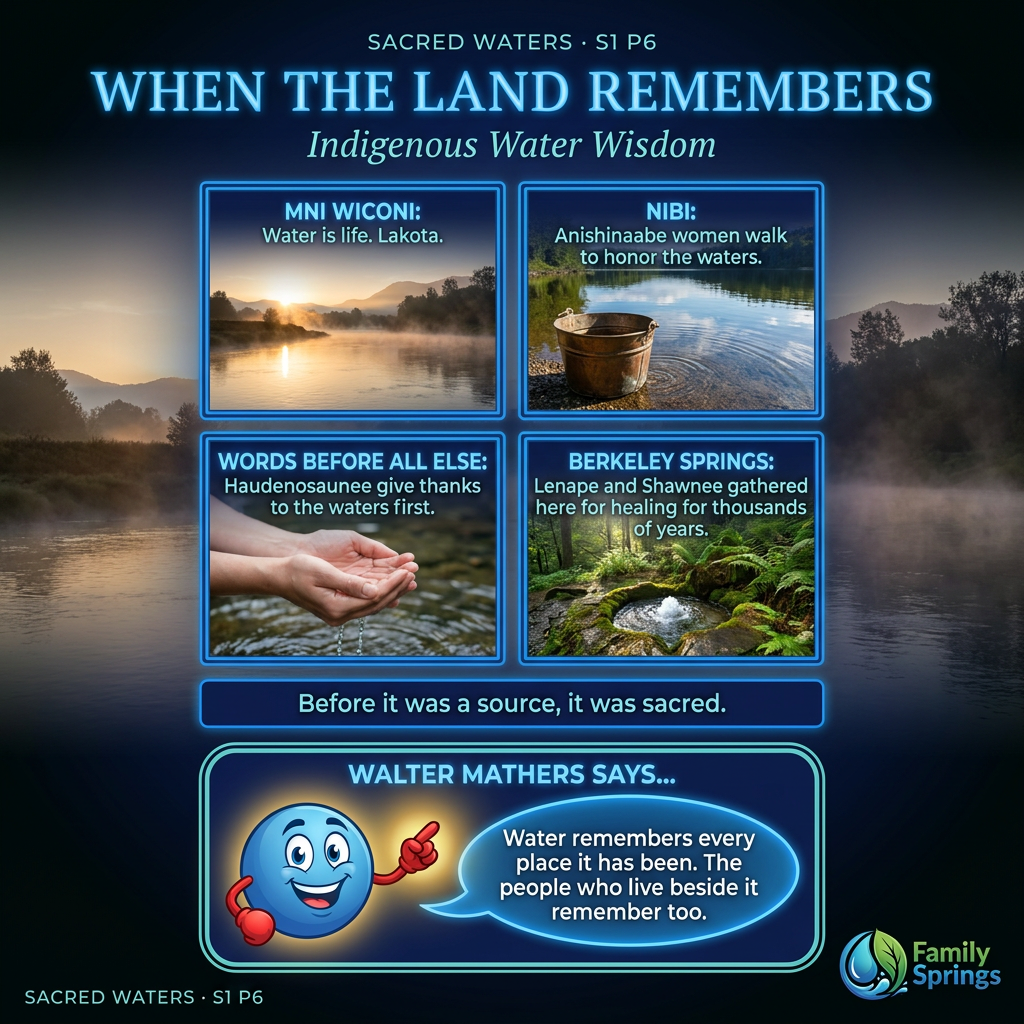
The spring Family Springs sources from has been considered sacred for thousands of years. That is worth sitting with for a moment. Before there were bottles, labels, or delivery routes, there were peoples who knew this water, named it, and cared for it. Understanding that history changes how we think about bringing that water to a family's table.
This week we are listening to a few of the many Indigenous nations who understand water as relative, teacher, and responsibility. These are living peoples with living traditions, and no single post can speak for all of them. Think of this as an invitation to listen, not a lesson delivered from the outside. We name specific nations because each has its own language, its own teachings, and its own voice.
Mni Wiconi: Water Is Life (Lakota)
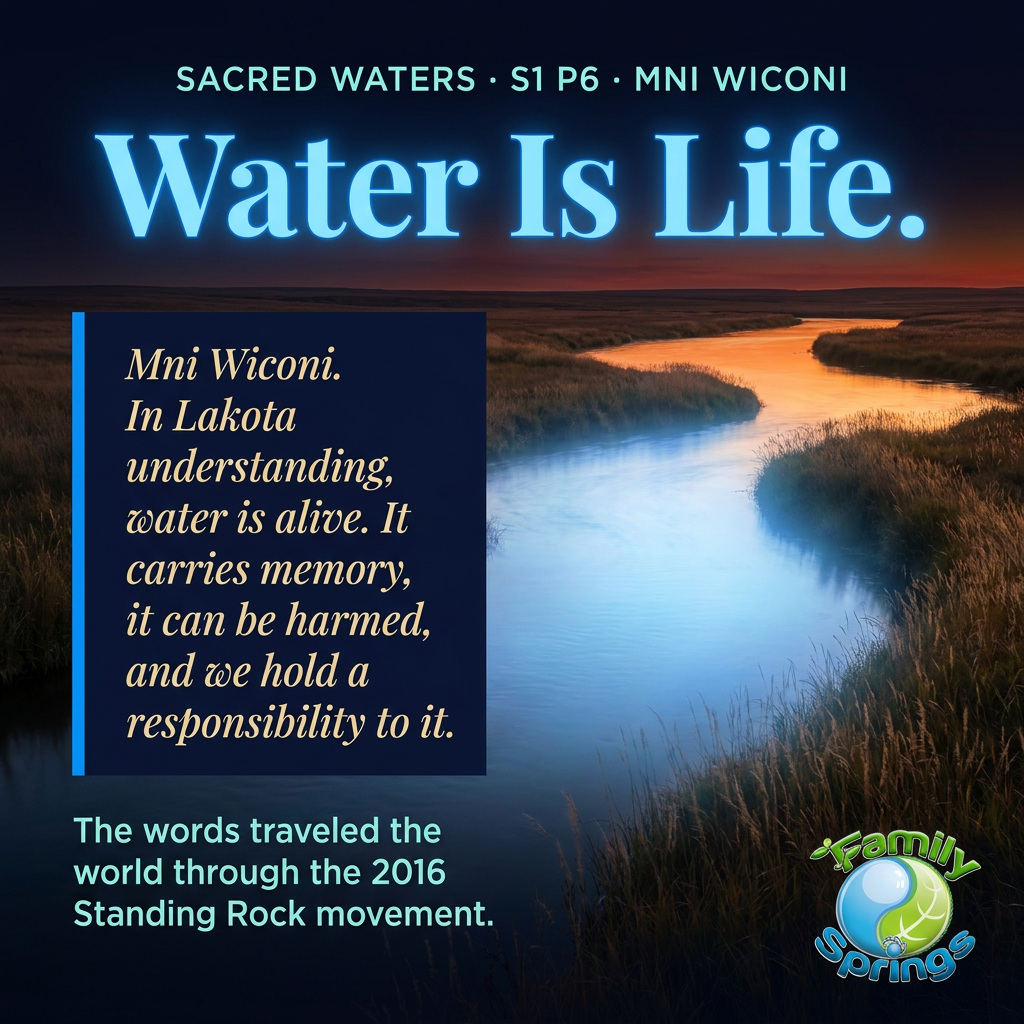
For the Lakota, Mni Wiconi means "Water is life." It is more than a slogan. In Lakota understanding, water is alive, it carries memory, and it can be harmed. Because of that, people hold a reciprocal responsibility toward it: water gives life, and people owe care in return.
Many people first heard the phrase during the 2016 Standing Rock movement, when water protectors and thousands of supporters gathered to defend the Missouri River.[1] For the Lakota, those words were never new. They were a long-held teaching, spoken aloud for the world to hear.
The Women Who Carry the Water (Anishinaabe)
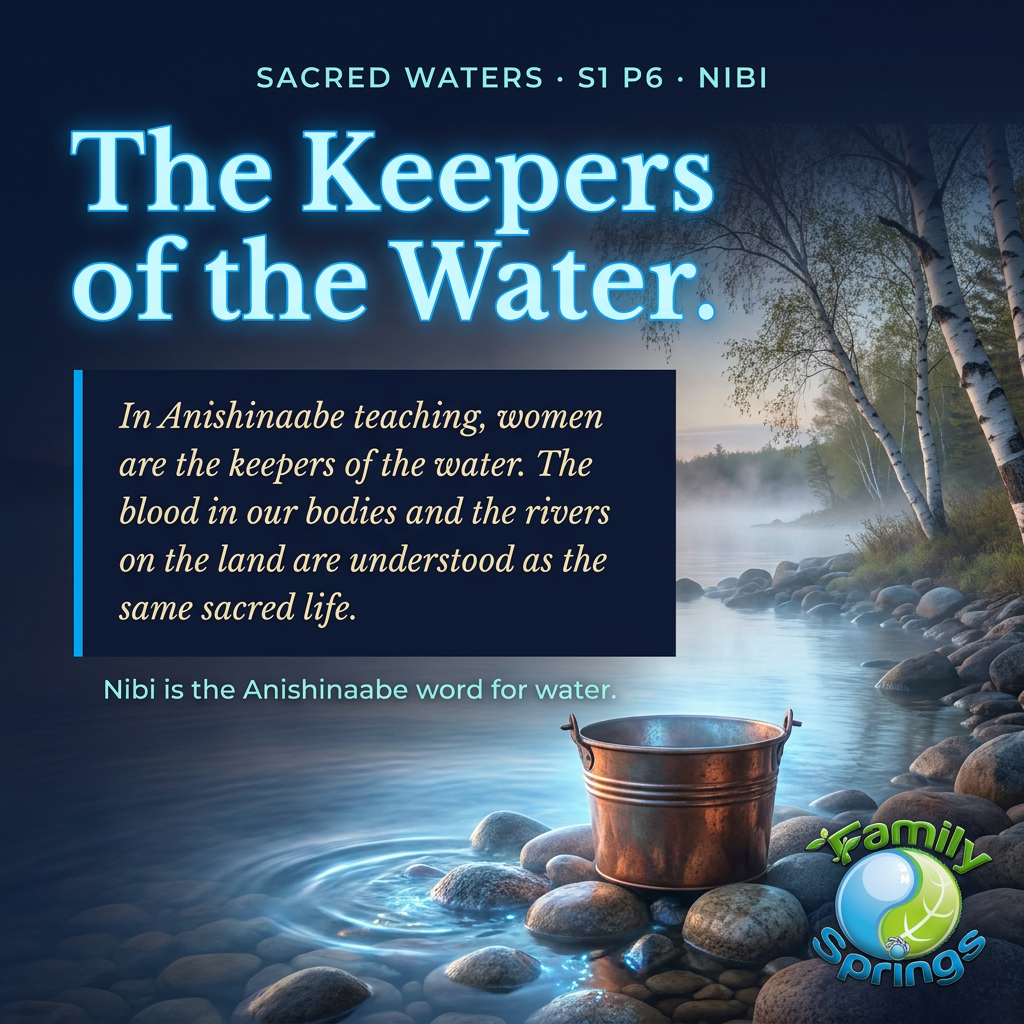
Among the Anishinaabe, nibi (water) ceremonies are led by women. In this teaching, the blood that moves through our bodies and the rivers that move through the land are understood as the same sacred substance in different forms. Women are the keepers of water, and they carry that responsibility with great seriousness.[2]
Ceremonies belong to the communities that hold them, so we share only the broad teaching here. If this moves you, we encourage you to learn more from Anishinaabe voices directly.
Before It Was a Source, It Was Sacred (Berkeley Springs)
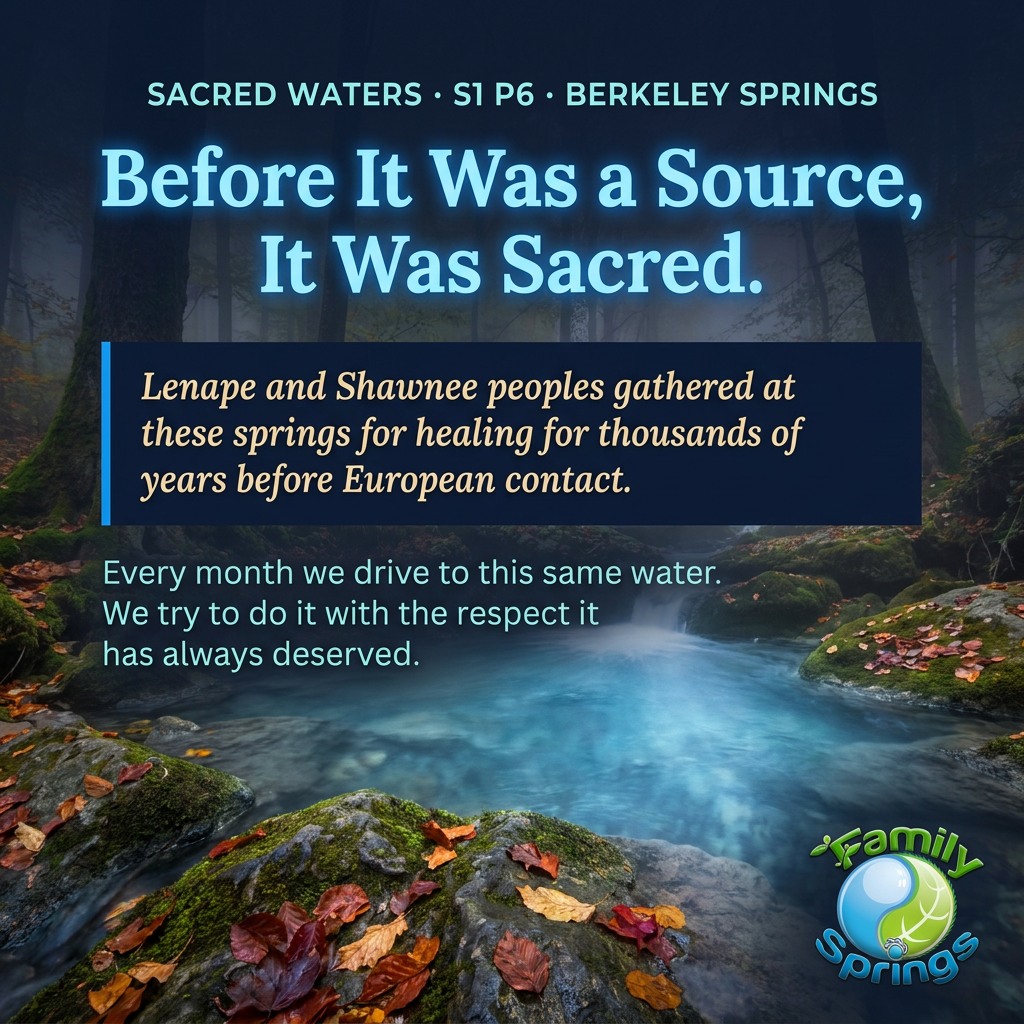
Berkeley Springs, West Virginia, is one of the places Family Springs gathers water. For thousands of years before European contact, the Lenape and Shawnee peoples used this place as neutral sacred gathering ground for healing. Nations that might not have shared a table elsewhere could meet here for the sake of health.[3]
The spring did not become important when it appeared on a map. It was already a place of peace and care. The Lenape and Shawnee are living peoples today, and this history belongs to them first.
Words Before All Else (Haudenosaunee)
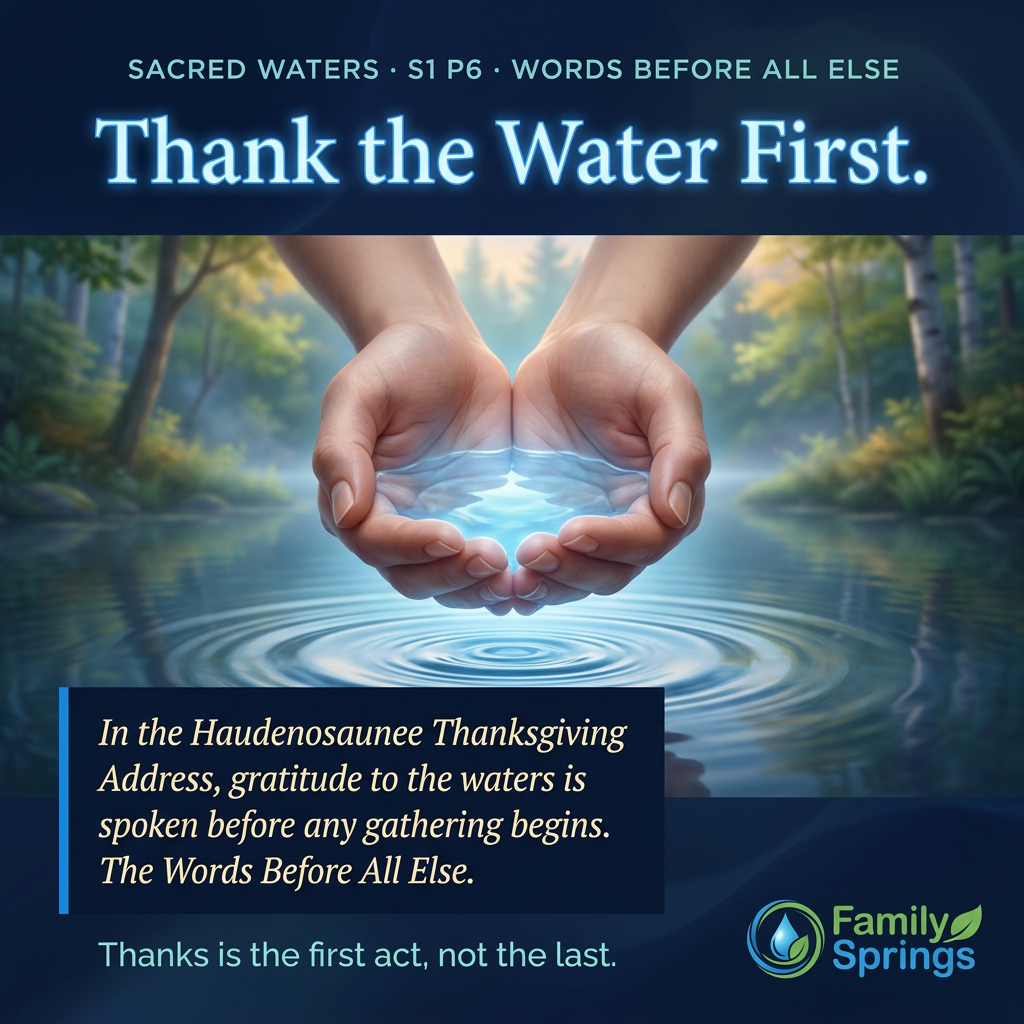
The Haudenosaunee Confederacy, made up of the Mohawk, Oneida, Onondaga, Cayuga, Seneca, and Tuscarora nations, carries a teaching called Ohen:ton Karihwatehkwen, or "Words Before All Else." It is also known as the Thanksgiving Address. It offers formal gratitude to the waters of the world, and it is spoken first, before any gathering begins.[4]
Imagine opening every meeting by thanking the water before anything else is said. Business waits, and gratitude comes first. It is a simple habit, and it shapes how a community understands what it depends on.
Protecting the Water Today
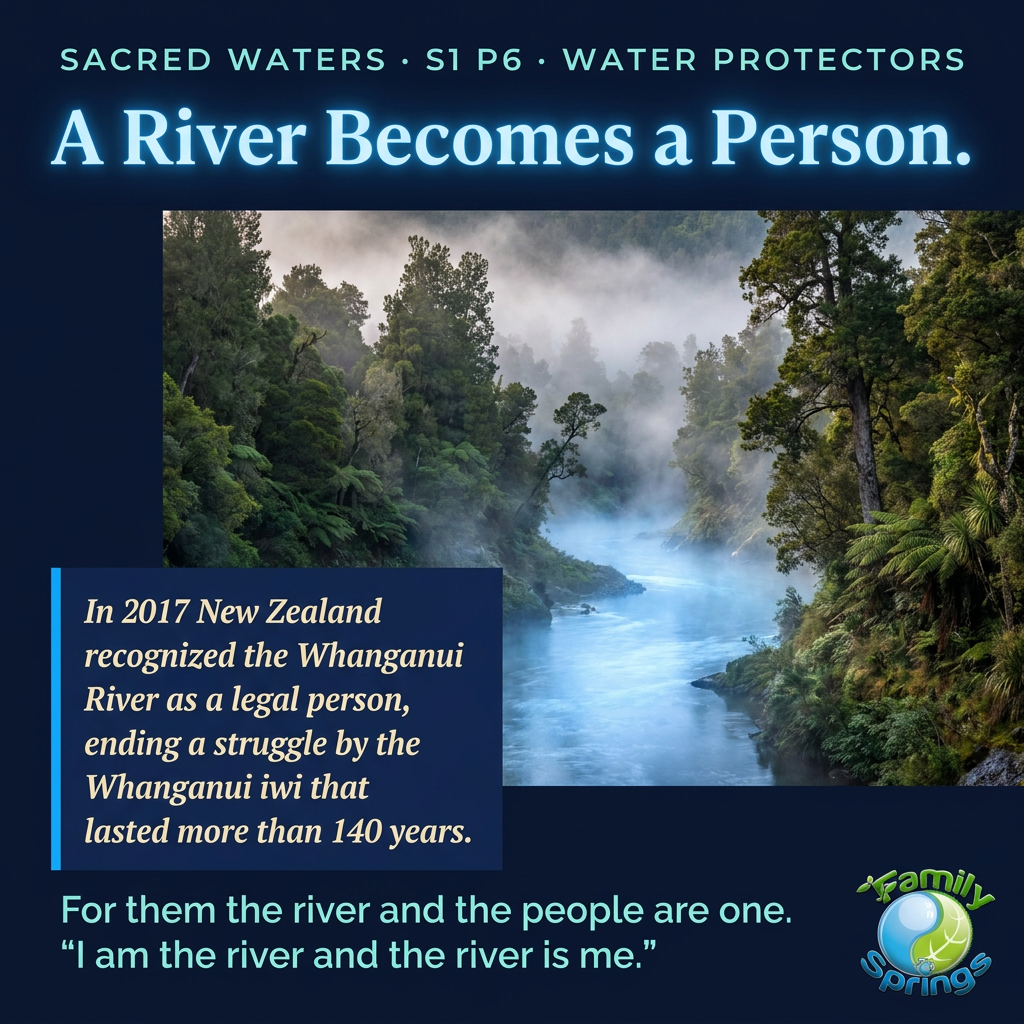
Indigenous water protection movements have been among the most effective environmental conservation efforts in modern history.[5] One example comes from Aotearoa New Zealand. In 2017, the Whanganui River was granted legal personhood, following a struggle by Whanganui iwi that lasted more than 140 years. The river is recognized as a living whole, not as property.
That outcome came from generations of persistence, patience, and refusal to give up on a river that many families have called ancestor. It echoes what the Lakota, Anishinaabe, and Haudenosaunee teachings share: water is not only something we use. It is someone we are in relationship with.
Carrying the Water With Care
We do not own this story, and we are still learning it. What we can do is carry the water with gratitude, be honest about where it comes from, and give back to the community along the way. That is the spirit behind our monthly drive, and we are grateful to everyone who takes part.
If you would like to join in, you will find details on our site. If not, that is perfectly fine. Simply carry this with you the next time you fill a glass, and thank the water first.
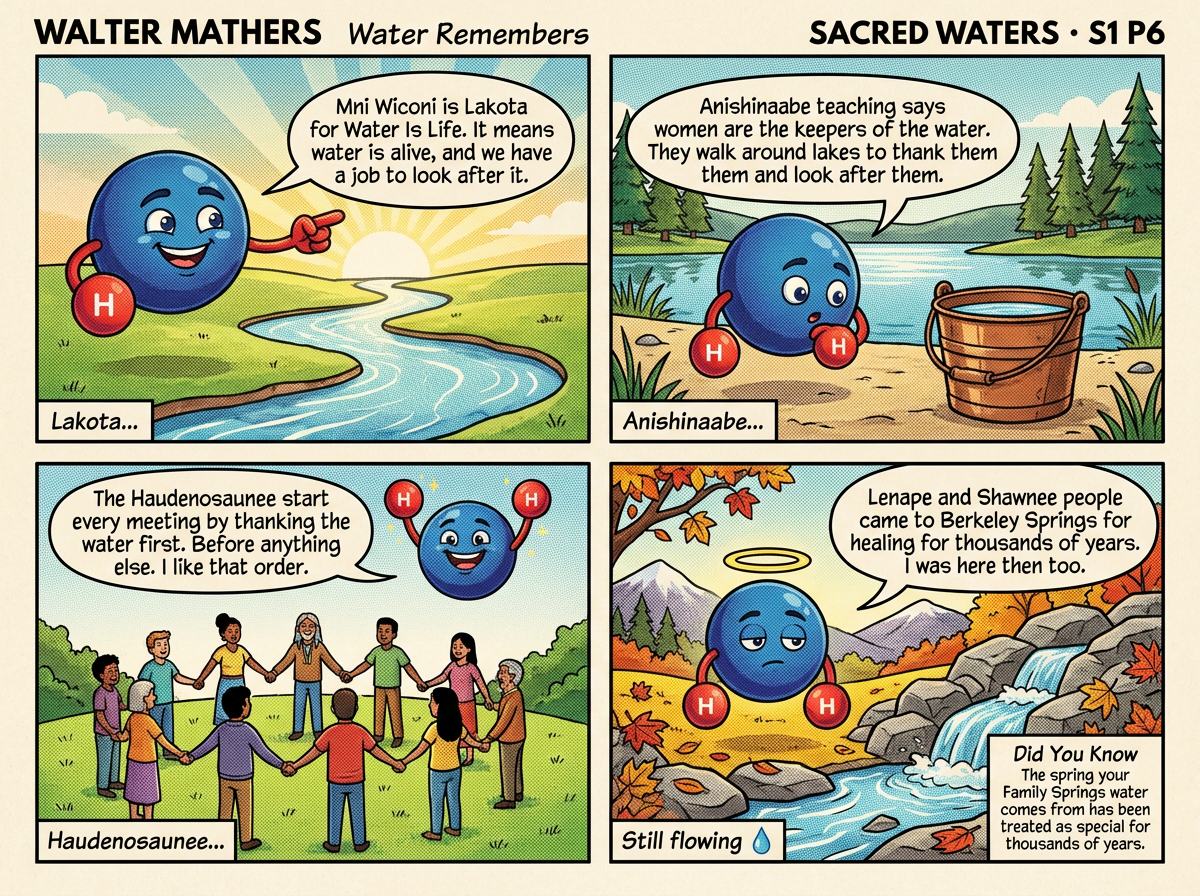

Walter Mathers says
Hi, friends! I am Walter, a water molecule, and I have been around a very long time. This week I learned that people have been saying thank you to water for thousands of years. Next time you take a sip, try saying thank you too!
References
- https://consensus.app/results/?q=Mni+Wiconi+water+is+life+Lakota+Standing+Rock
- https://consensus.app/results/?q=Anishinaabe+water+ceremony+women+nibi+water+walkers
- https://consensus.app/results/?q=Berkeley+Springs+Lenape+Shawnee+sacred+healing+springs
- https://consensus.app/results/?q=Haudenosaunee+Thanksgiving+Address+Words+Before+All+Else+water
- https://consensus.app/results/?q=Indigenous+water+protection+Whanganui+river+legal+personhood
Canva infographic social media content Unauthorized Try again