

Sacred Waters · Week 7 · Series 2, Part 1
The Nile and the Sacred Flood: Egypt's Water Religion
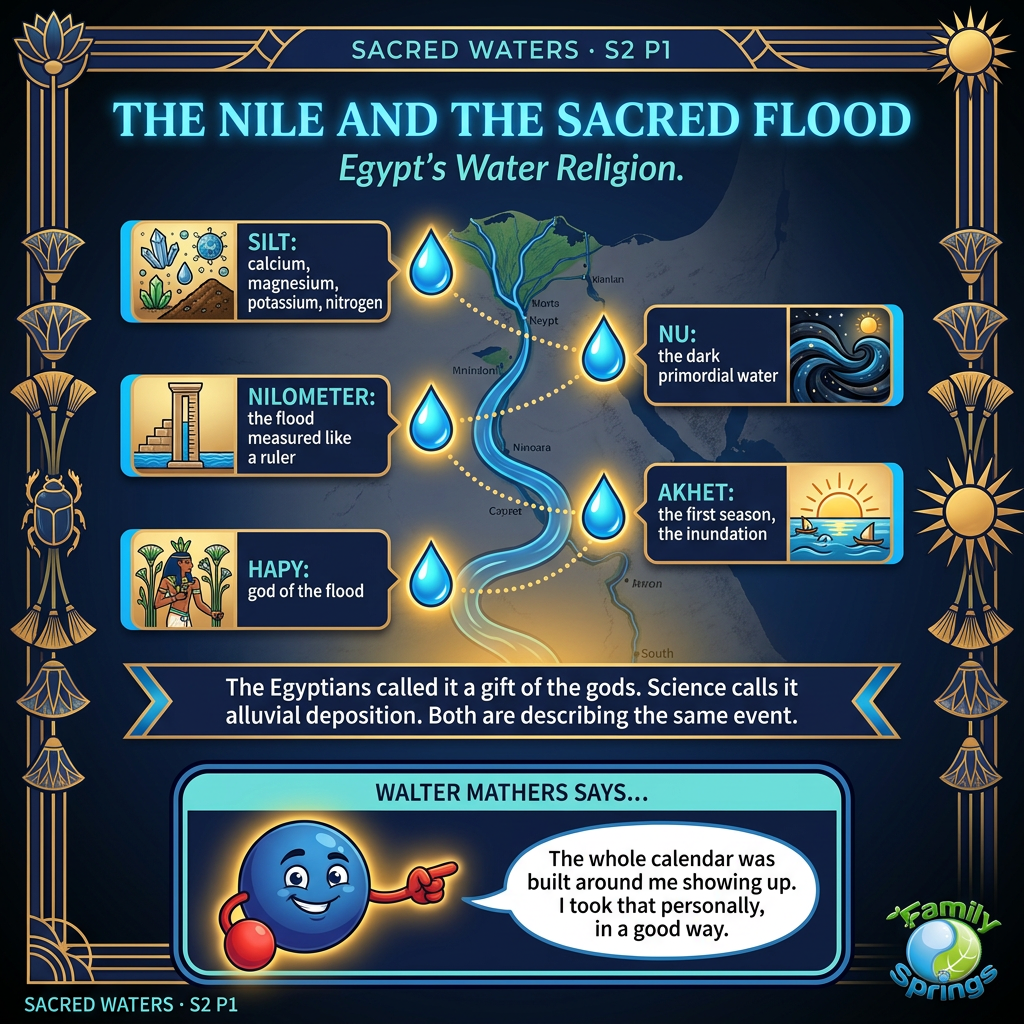
Egypt did not just live beside a river. Its calendar, its religion, its medicine and its taxes were all organized around the arrival of water. Every summer the Nile rose, spread across the land, and slowly drew back again. For the people who lived there, that rhythm was the pulse of the year.
This week we open Series 2, Water in Ancient Civilizations, on the banks of the Nile. In Series 1 you met Isis weeping for Osiris. Today we leave that story behind and look at the rest of Egypt's water world.
Hapy and the Season of the Flood
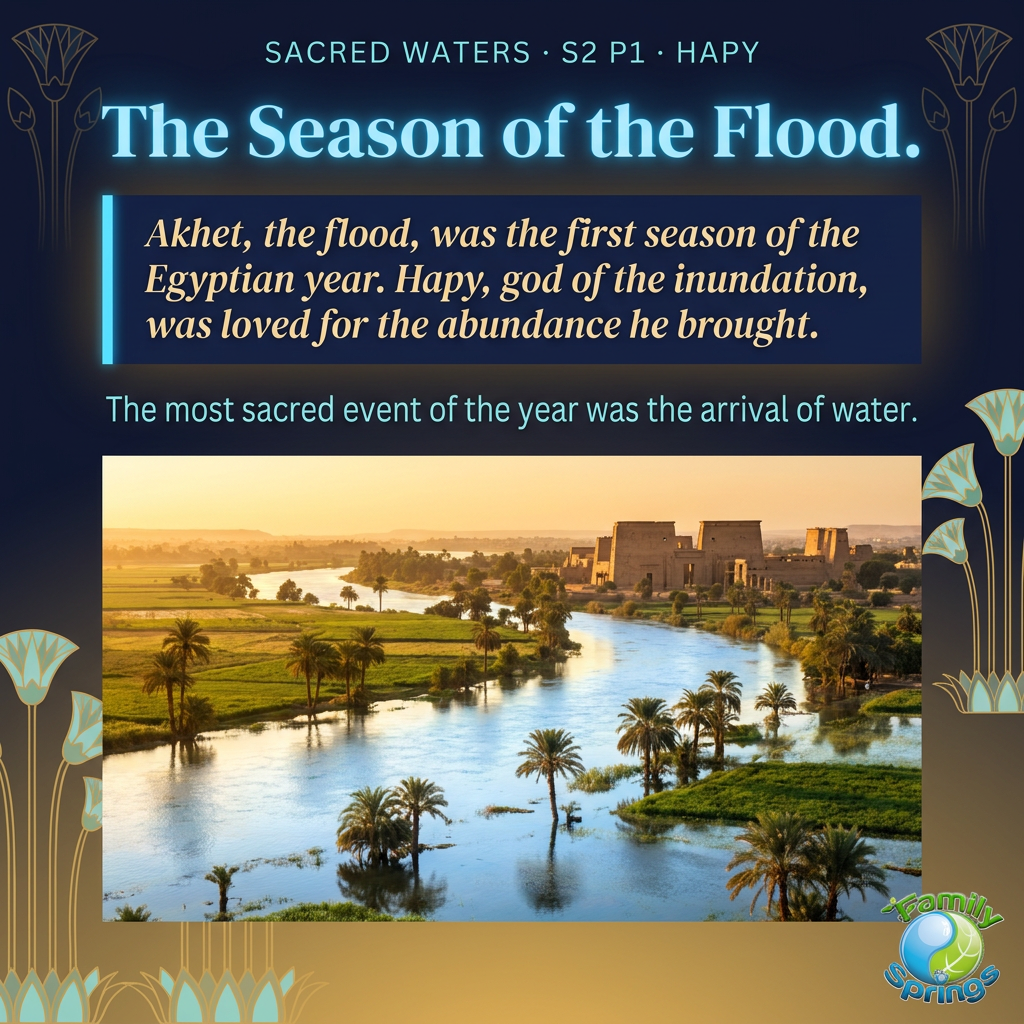
Egyptians personified the flood as Hapy, a god associated with the Nile's rising and with abundance. Artists often showed him as a heavy, generous figure crowned with water plants and carrying food, a picture of plenty.[1]
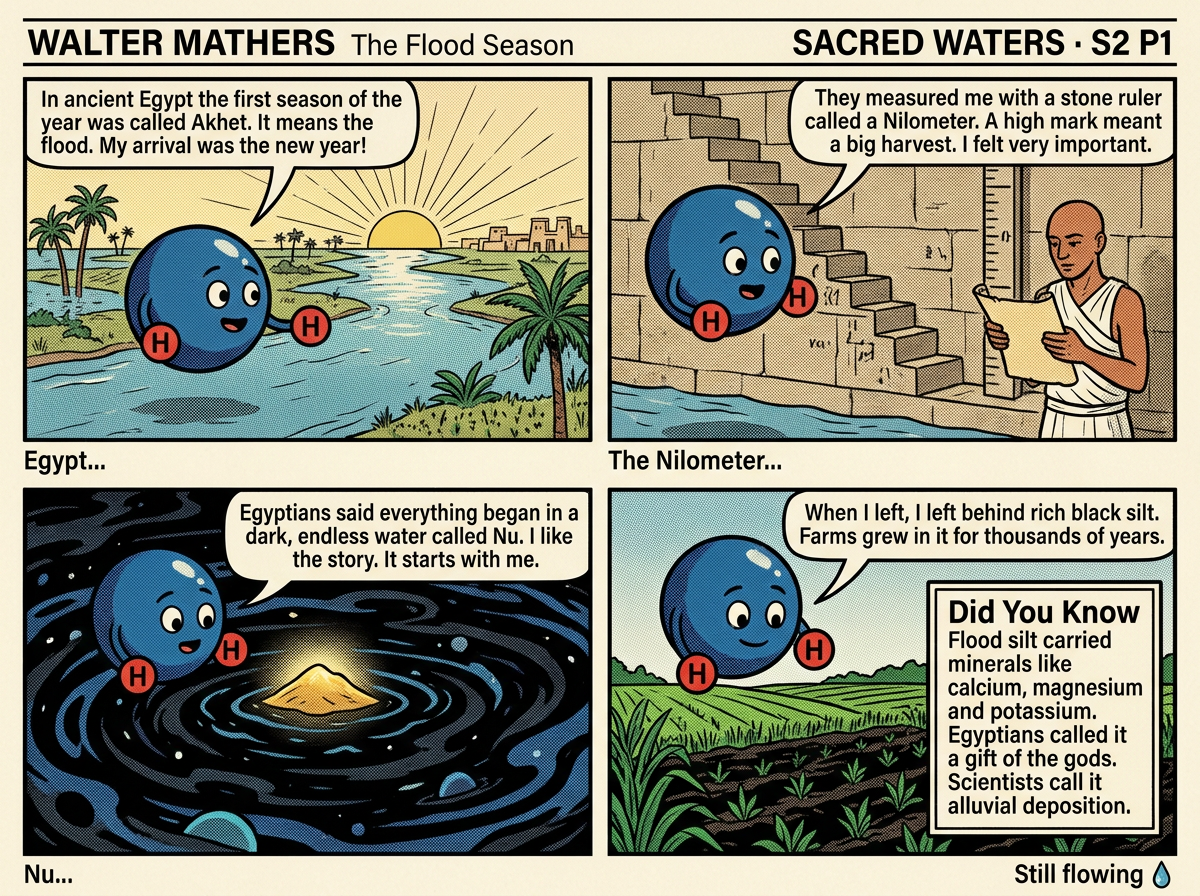
The flood itself was called the inundation, and its season, Akhet, was the first season of the Egyptian year. It was the most sacred annual event, and communities marked its arrival with festivals and offerings to give thanks for the water. Those festival details come mostly from later texts and temple art, so they are best read as tradition. A caution is worth stating plainly: what we know about Hapy comes from hymns and artwork. They tell us what Egyptians believed, not what the river measured.
When the river rose, the year began.
Measuring the Miracle
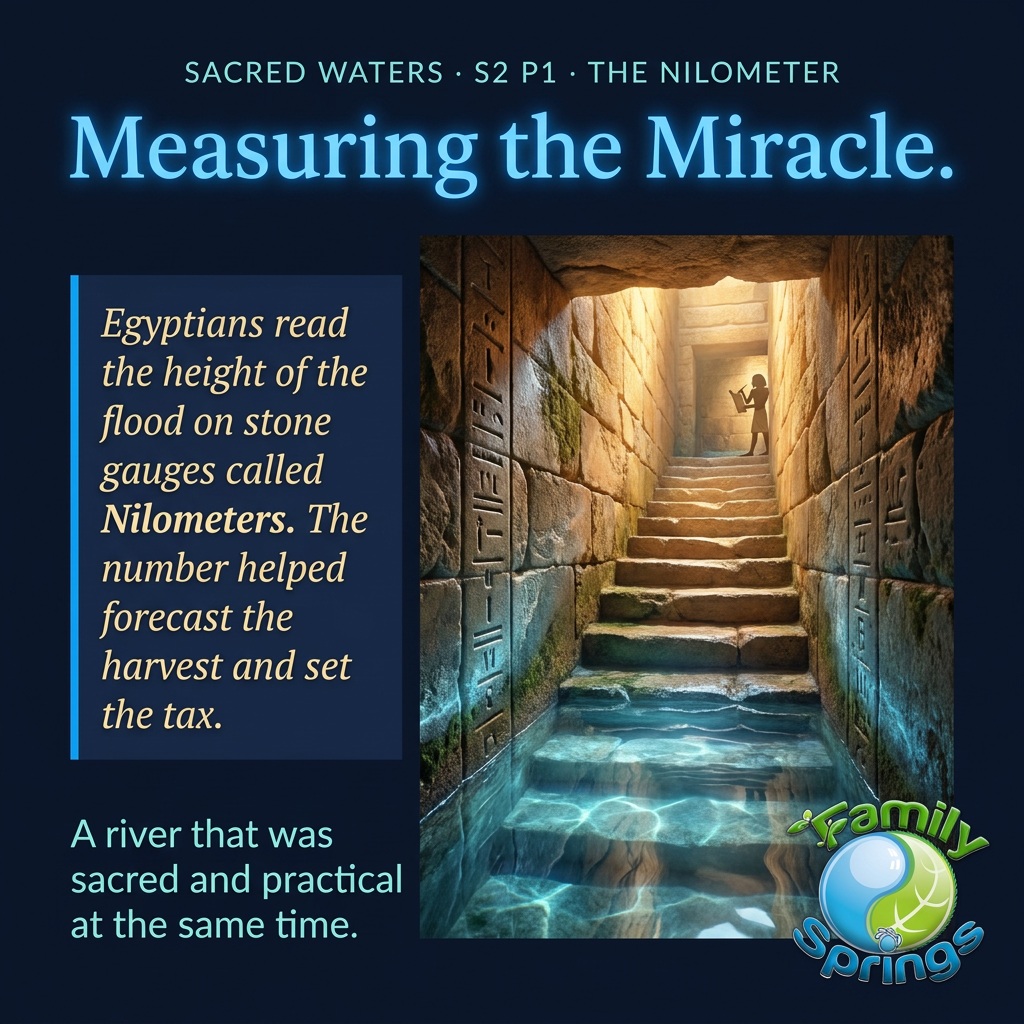
Egyptians did not only worship the flood. They measured it. At gauges called Nilometers, often stairways or shafts cut down to the river, officials read the height of the water against marks on the stone. That reading helped forecast the harvest and set the tax.[2]
A higher flood generally promised a bigger crop, and a bigger crop meant a bigger tax bill. Many of the Nilometers that survive today come from later periods, so we should be careful about assuming every detail applied in the earliest centuries. Even so, the record shows a society that treated one river as both a deity and a dataset. Still, the idea is striking: the Nile was sacred and practical at the same time, a god and a number carved on a wall.
What the Ebers Papyrus Tells Us
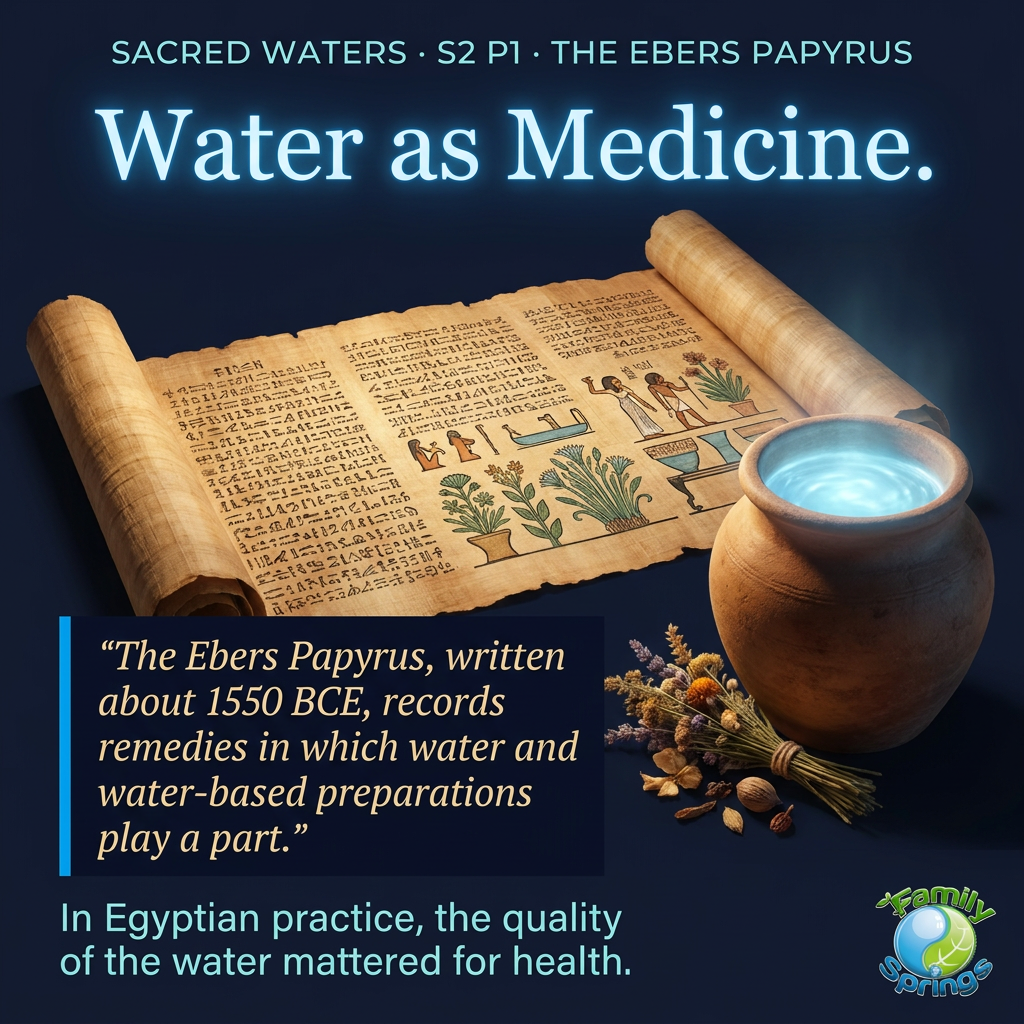
The Ebers Papyrus, written about 1550 BCE, is one of the oldest and longest surviving Egyptian medical texts. It records remedies, and it indicates that water and water-based preparations were part of treatment.[3]
We should not read modern medicine into it. The papyrus mixes practical observation with spells and ritual. What we can say carefully is this: water, and the quality of that water, had medical significance in Egyptian practice.
Before Everything, Nu
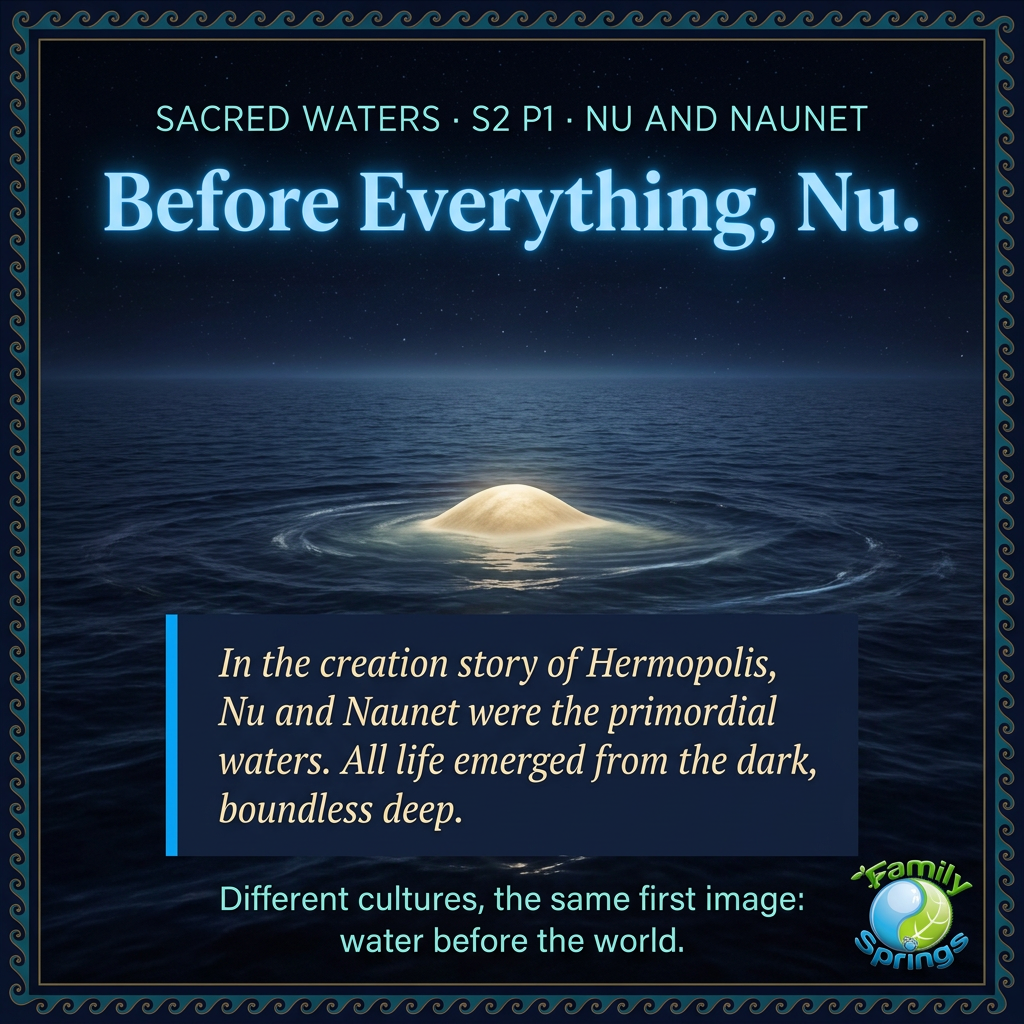
One of Egypt's creation traditions comes from Hermopolis, home of a group of eight deities called the Ogdoad. Among them were Nu and Naunet, personifications of the primordial waters. In this tradition, all life emerged from the dark, boundless Nu.[4]
This is one creation story among several in Egypt, and it reaches us through religious texts rather than archaeology. It tells us how Egyptians imagined the beginning of the world: not with fire or stone, but with water. Many cultures later told similar stories, and we will meet some of them in the weeks ahead.
The Gift in the Silt
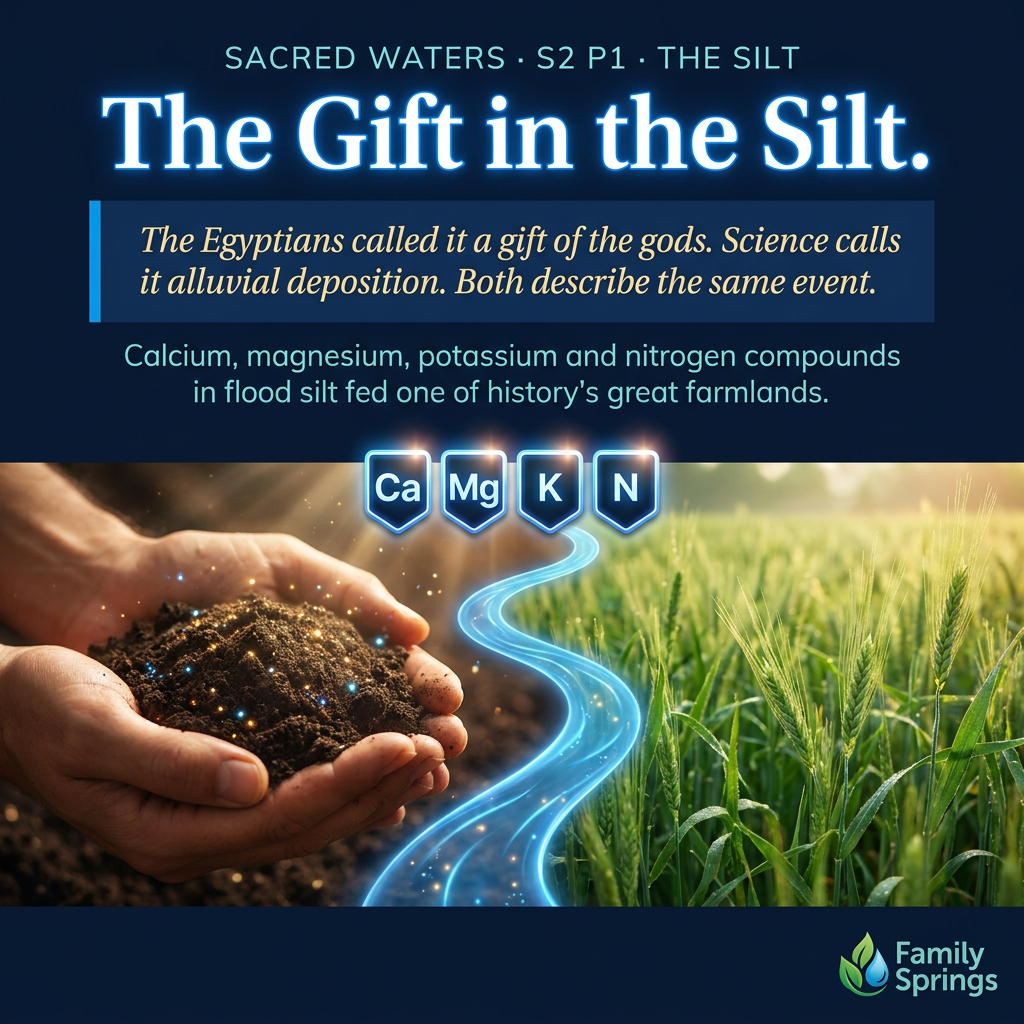
As the floodwaters withdrew, they left behind a layer of fine, mineral-rich silt. It carried calcium, magnesium, potassium and nitrogen compounds that renewed the soil each year and made the Nile valley and delta some of the most fertile farmland in history.[5] Egyptians even called their land Kemet, the Black Land, after that dark earth.
Egyptians called the flood a gift of the gods. Science calls it alluvial deposition. Both describe the same event. That annual gift ended when the Aswan High Dam, completed in 1970, stopped the yearly flood.
Where Water Comes From Matters
Ancient Egypt reminds us that water is never just water. Its source shaped the food, the health and the stories of an entire civilization. The richness of the Nile's soil came from the places the water had traveled.
We think about that at Family Springs. The minerals in any spring water come from the ground it moves through, which is why knowing the source matters to us. We are still learning from civilizations like Egypt's, and we are glad to learn alongside you.

Walter Mathers says
The Nile flooded every year, and Egyptians turned that into a calendar, a ruler and a story about how the world began. Water was their clock. What do you use water to keep track of?
Next week we travel to Mesopotamia. Catch up on the whole journey.
Read the SeriesReferences
- https://consensus.app/results/?q=Hapy+Nile+inundation+Akhet+ancient+Egypt+religion
- https://consensus.app/results/?q=Nilometer+ancient+Egypt+flood+measurement+harvest+taxation
- https://consensus.app/results/?q=Ebers+Papyrus+ancient+Egyptian+medicine+water+remedies
- https://consensus.app/results/?q=Nu+Naunet+Ogdoad+primordial+waters+Egyptian+creation
- https://consensus.app/results/?q=Nile+flood+silt+alluvial+deposition+soil+fertility+Egypt