Bonds are the most important part of understanding our life in relationships with others and the world. Bonds are formed through a chemical transaction between two or more atoms, and being that we are all organic molecules of atoms sharing an experience in this world, it is important that we understand the nature of the mechanics that bring us together. We often struggle with our identity because we do not know the nature of our bonds and the natural chemistry that forms them. Water Bonds of Life explores the essential role of water in sustaining all living organisms. From cellular functions to vast ecosystems, water connects every form of life on Earth.
Table of Contents
Water Bonds of Life Journey
This journey unveils how these invisible bonds shape our health, environment, and future. There are many types of bonds, and their causes and effects are different based on the chemical reaction that takes place. These chemical transactions can be the response to how we interact in our relationship with each other. We often think of water as just a liquid fluid that flows, but the molecule of H₂O plays a larger role in our lives. The molecule of H₂O sticks our DNA structure together, bonds us to one another, and has the ability to connect us with others across the world.
The Vital Role of Water in Aging and Brain Health
A baby starts out between 80% and 90% water, then children are 70%, and as adults, it ranges from 60% to 65%. Once the person becomes elderly, it drops drastically to 55%, which may explain the brittle bones, wrinkly skin, and short-term memory for some of the elderly, not to mention the disconnection with youth. When we age, our bodies have less water in them because the perception of water decreases over time and can be the cause of mental and physical fatigue.
Conditions of the brain like dementia and other types of mental health issues such as post-traumatic stress syndrome are due to the shrinking of the brain from lack of water. The brain is 85% water, so any loss of water would definitely affect the functionality and connectivity of the neurons in the brain, hints-forth the term “waterhead.
Chronic diseases are the signal for dehydration in the body, and when the siren is not attended to or the call not answered, this will cause great problems for anybody. The importance of how we actually bond with our children and each other is through the connection of water. Waves are created by energy passing through water and are felt from one being to another.
Water can hold and share many types of expressions, and through a better understanding will help us to become even closer with the elements that exist as a molecule to form bonds of life.
The greatest universal solvent on earth is water… The greatest solution to many of life’s questions and problems is, you guessed it water.
The Creator gave it to us in abundance so that we may have a solution to many of life’s problems we face, but because the majority of us only understand the basics of water, we fall victim to the circumstances that surrounds our environment, which affect our chemical makeup.
There’s nothing new under the sun… and yet “Our people will be destroyed for a lack of thirst (knowledge).”
We must first learn the basis of what it is so we can further understand how something that makes up the majority of our world and body controls who we are in society and our relationships to one another. The information presented will be about water as we know it and how its chemical bonds shape the health of our mind, body, life, and society.
In order for water to become a molecule, it takes a special bond between 1 oxygen atom and 2 hydrogen atoms… I know everyone knows this already. But how this takes place shapes our entire understanding of existence. See, we are all organic molecules of atoms that form bonds with one another. An atom wants to fulfill its octet by bonding with another atom to make it complete. What’s an octet, you might ask? In order to understand the nature of your physical being, you must first know something about the level before it.
Before we came to be and know about the physiology of who we are, we must first know something about the elements on the periodic table. The chemical transaction of elements forms bonds to build our structure, each element’s relationship to one another determines the strength or type of bond. Each element on the chart is trying to transition to the far right side to become a noble gas. Noble gases are complete elements, meaning that they possess a full octet on their outermost shell, which stabilizes the structure making it complete in itself. What it means to be noble is something many of us aspire to become.
The Search for Stability: Atoms and Human Connection
For an atom to become stable is the way we look at everlasting life or the certainty of death. Much like an atom, we look for someone to bond with to complete us and make our lives easier, and with reduced stress levels, it is very much possible. Well, an atom wants to be stable also to operate at a lower energy state to retain its form indefinitely, but an unstable atom does not have enough binding energy to hold it’s nucleus/center together, ultimately stressing itself out, where it will eventually become unbalanced and can be destroyed at any anytime and will soon undergo radioactive decay.
This happens to us all when stress overcomes our ability to handle ourselves, and we lose ourselves in the balance of everyday life. So, for it to live for eternity, it needs stability through a bond that gives it balance.
Understanding Atomic Structure: Protons, Neutrons, and Electrons
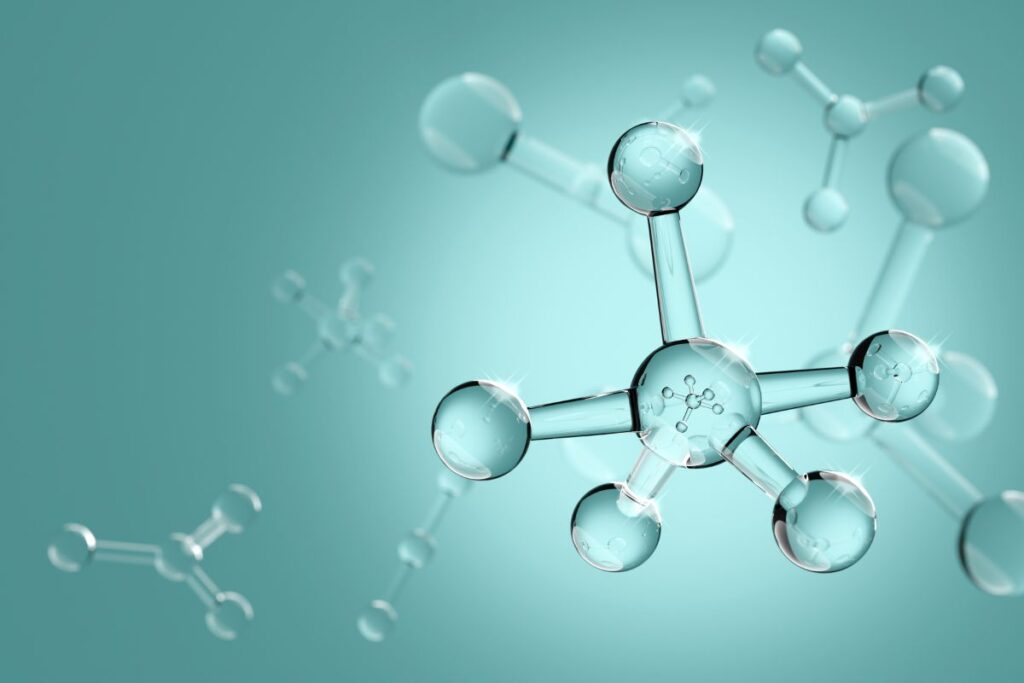
All atoms have protons, neutrons, and electrons. The atom starts out neutral with an even amount of protons (+) and electrons. The protons and neutrons are located in the nucleus, which is the center of the atom which holds the density/weight and carries a positive charge because of the number of protons. The neutrons do not carry a charge. The neutralizing charge comes from the number of the electrons. Everything begins neutral with the balance.
The electrons orbit around the atom known as an electron orbital shell or valence shell, and in order for an atom to become stable, it must get to the number 8 on its outer shell to be whole, sort of like a pizza. This is known as the octet rule whereas electrons want to become a noble gas, which has the number 8 electrons in its outermost shell.
The number 8 represents balance and is the symbol for resurrection, regeneration, or a new beginning. It is a sign of infinity and is mentioned numerous times throughout the Bible. An atom is willing to bond together with another atom for stability and balance, and that means they must get to the number of completion, being eight.
So, how does it connect to water?
There are only 6 electrons in oxygen’s outermost shell, so it combines with a pair of hydrogen atoms because each one of them carries 1 electron apiece to complete a molecule of water through a chemical bond. Water is a basic building block of life. Raw materials are bonded together to form a molecule of water and its raw materials are needed in the construction of a house. Our reality is that we are all atoms that are looking for someone to bond with to complete our electron shell to feel complete in the grand scheme of things.
Unfortunately, at times as humans, we only look to bond to the outside orbital shell, like the atoms, instead of seeking the core or the matter, which is the nucleus. After all, we are a microcosm of the universe that the Creator created for us to share our experience of the world.
Atoms want to make their electron orbitals/house complete by fulfilling what it needs most or what it can do better without. An atom bonds to make a molecule, a molecule makes a macromolecule, which forms an organelle that creates a cell, then cells form tissue, tissues make organs, and organs make an organ system, and the final stage is an organism living out the human experience. If we look at our life from the perspective of an atom, we would know that we share the same journey of transitioning through our life, creating different bonding experiences in search to fulfill our octet to become a noble being.
Look at it this way we all start out as an atom with a positive core/center/nucleus, and we are to journey across the periodic table on a quest to be noble. The journey begins on the left side of the table, which is the electropositive (+) side, and the further right we travel, the more electronegative (-) the elemental experience becomes. Which means you have to go through the “transition” or transitional metals to obtain noble status.
Elemental periodic table
As we travel across the elemental periodic table like a role-playing video game from left to right through different bonding relationships on a quest to become noble gas, our experience is determined by the nature of the bond, which shapes our outlook on life and how we feel inside.
Our negative outlook on life is based on negative experiences, and negativity is a part of the journey through different bonding relationships. This brings great value to our transition from the experience of knowing what’s negative. Only through knowing what’s been done do we give definition and appreciation to what’s positive. Contrast defines the art of living.
Conclusion: Water bond of life
In the water bond of life, the water bond is not just a chemical connection but a fundamental force that sustains all life. From the smallest cell to the vast ecosystems of our planet, water’s ability to bond and flow makes life possible. It nurtures growth, maintains balance, and connects every living being, reminding us that in unity and stability, life thrives.
You may also like: Water Aids in the Flow of Digestion
- December 1, 2021
- We Are Water